Restorative & Preventive Dentistry
Tooth Decay in Las Vegas, Nevada
Early detection and expert care for a stronger, healthier smile at SunBrite Dental.
At SunBrite Dental of Las Vegas, Nevada, Dr. Mina Abalos and our caring dental team educate patients about tooth decay—what causes it, how to stop it, and the most effective treatments available. Our mission is simple: prevent decay before it starts, and restore your teeth when it does. With regular visits and advanced care, we help you keep your smile bright, healthy, and pain-free.
Tooth Decay in Las Vegas
Understanding Tooth Decay
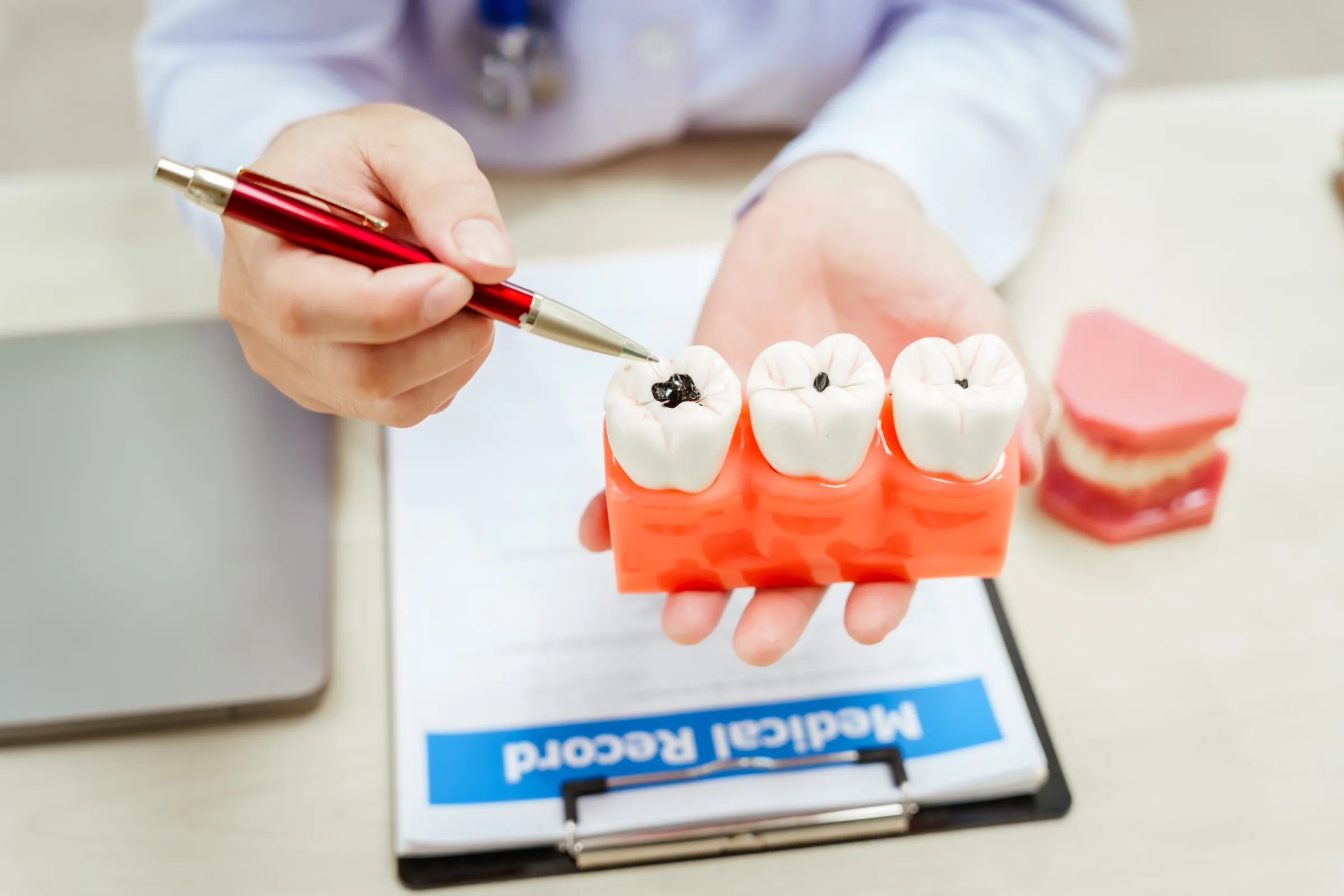
Tooth decay—also known as dental caries—is simply rot in your teeth. Much like how fruit or vegetables spoil over time, decay doesn’t stop on its own and can spread to neighboring teeth if left untreated. At SunBrite Dental, we help patients understand the stages of decay and take preventive steps to stop the damage early.
Common Causes of Tooth Decay
Decay occurs when bacteria in plaque break down food particles and produce acid that eats away at the enamel. Without consistent brushing, flossing, and dental visits, these acids create permanent damage to the tooth surface.
- Poor Oral Hygiene Skipping brushing or flossing allows bacteria to grow.
- Irregular Dental Visits Missing cleanings allows plaque and tartar to build up, increasing your risk of cavities.
- Sugar-Heavy Diet Bacteria feed on sugar, producing acid that weakens enamel.
- Dry Mouth Reduced saliva flow limits the mouth’s ability to neutralize acid and wash away food particles.
Our team often recommends the “trifecta of success”: brush twice daily, floss or use a Waterpik once a day, and schedule routine checkups. For patients at higher risk of decay, quarterly cleanings every three months can make all the difference.
The Stages of Tooth Decay and Treatment Options
We treat each case of decay based on how far the damage has progressed. The sooner decay is detected, the simpler—and less costly—the treatment will be.
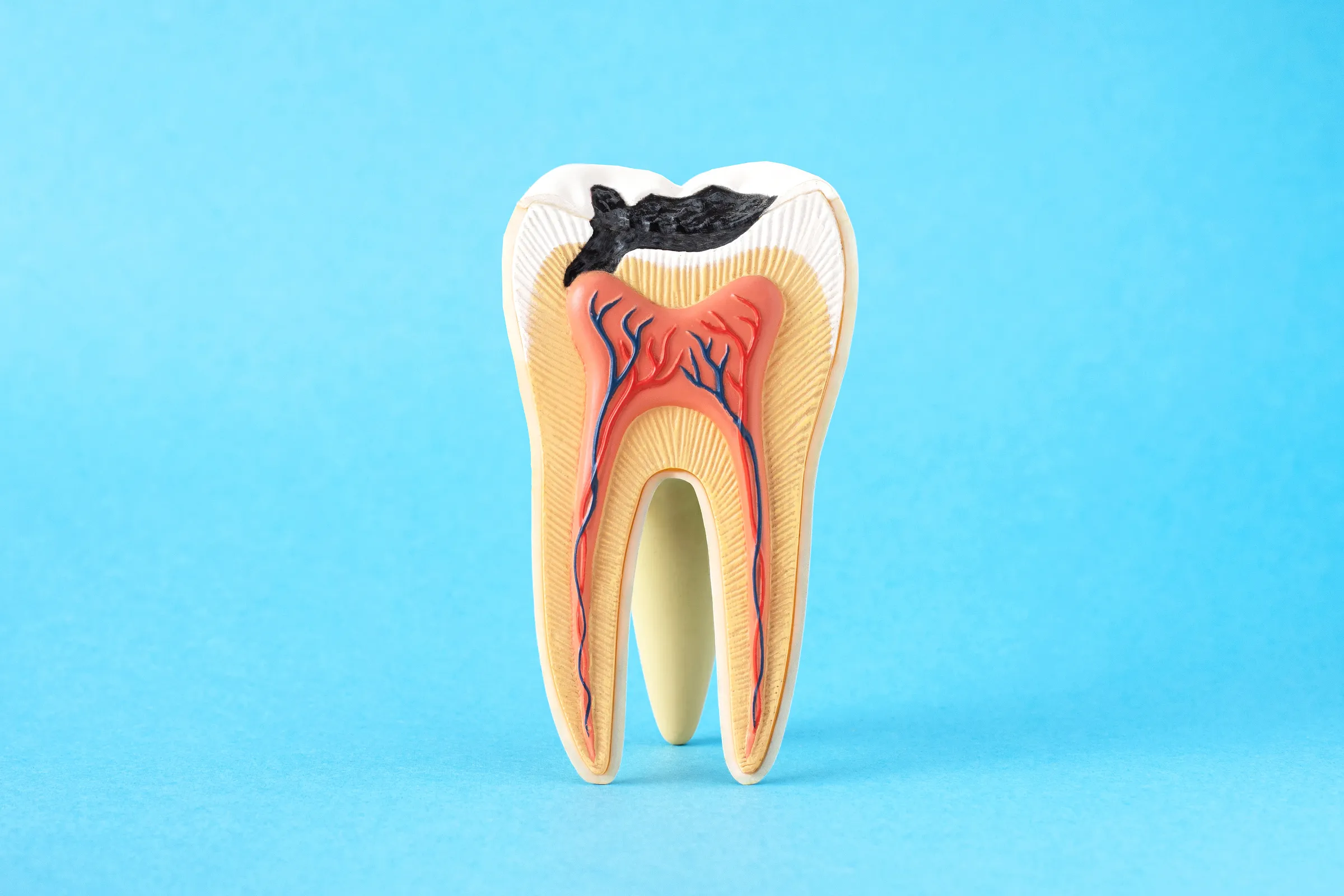
- Early-Stage Decay A small cavity can be easily treated with a tooth-colored filling.
- Moderate Decay When decay affects a large portion of the tooth, we use a dental crown (a “helmet” for your tooth) to protect and restore strength.
- Advanced Decay If the decay reaches the tooth’s nerve, root canal therapy is required to remove infection and save the tooth, followed by a crown.
- End-Stage Decay If too much of the tooth is damaged, extraction may be necessary. We then discuss replacement options such as implants or bridges.
How Tooth Decay Affects Overall Health
Because each tooth has its own blood supply, untreated decay can lead to infection that spreads through the bloodstream, potentially affecting the heart and other vital organs. Keeping decay under control not only protects your smile but also safeguards your total-body health.
Preventing and Managing Tooth Decay
- Brush with fluoride toothpaste twice daily.
- Floss or use a Waterpik daily to remove plaque between teeth.
- Eat a balanced diet low in sugar and acidic foods.
- Visit SunBrite Dental regularly for professional cleanings and early detection.
Remember: decay never reverses on its own. Once it begins, only professional care can remove it. Take action early to prevent spreading and more complex treatments later on.
Call (702) 459-0303 or visit 560 N Nellis Blvd Ste E8, Las Vegas, NV 89110 to schedule your next checkup at SunBrite Dental.
Tooth Decay FAQs
- What exactly is tooth decay?
- Tooth decay is the process of rot or demineralization that damages your tooth’s hard surface. Left untreated, it can spread to other teeth and cause pain or infection.
- Can tooth decay heal naturally?
- No. Once decay begins, it cannot reverse. The damaged area must be cleaned and restored by a dentist to prevent it from spreading further.
- What causes tooth decay?
- Decay occurs when plaque—a sticky film of bacteria—builds up on your teeth and produces acid that eats through enamel. Poor hygiene, frequent snacking, and lack of dental visits increase your risk.
- How do I know if I have tooth decay?
- You may notice sensitivity to sweets or temperature changes, visible discoloration, or pain when chewing. However, many cavities are invisible without dental X-rays.
- Can decay spread to other teeth?
- Yes. Just like one bad apple can spoil the bunch, bacteria from one decayed tooth can spread to others if left untreated.
- What treatments are available?
- Depending on severity, decay can be treated with fillings, crowns, root canals, or in severe cases, extractions followed by implants or bridges.
- Can tooth decay cause other health problems?
- Yes. Bacteria from infected teeth can enter the bloodstream and affect your heart and other organs. Treating decay helps protect your overall health.
- How do I prevent tooth decay?
- Brush twice daily, floss daily, limit sugary foods, and visit SunBrite Dental at least twice a year—or four times annually if you’re prone to decay.
- Are dental X-rays safe?
- Yes. Digital X-rays at SunBrite Dental use minimal radiation and are essential for detecting decay between teeth and under existing fillings.
- When should I see a dentist?
- If you’ve been told you have cavities or suspect a problem, schedule an appointment as soon as possible by calling (702) 459-0303 or visiting SunBrite Dental of Las Vegas at 560 N Nellis Blvd Ste E8, Las Vegas, NV 89110.
Best Decision Ever
Walking into Sunbrite Dental was one of the best decisions I’ve ever made. From the very first visit, I could tell this wasn’t just another dental office — it’s a place filled with kind, caring, and talented people who truly love helping others. I was nervous and unsure at first, but everyone there made me feel so welcome and comfortable that my fear slowly turned into trust.

Love this office!
Absolutely love this dentist’s office! The staff is super friendly and helpful from start to finish. Everyone makes you feel welcome the second you walk in, and they’re great about answering questions and making sure you’re comfortable.

Affordable Care
We accept all major credit cards, debit cards, cash and checks. And to make your dental care affordable, we work with most major insurance programs, even if not in a patient’s network. We also partner with various financing options, including:





Schedule Appointment
Call us now at (702) 459-0303 or visit at 560 N Nellis Blvd. Ste E8, Las Vegas, NV 89110